
How Google Hires Machine Learning Engineers

Introduction
Google is one of the pioneering companies in the field of Artificial Intelligence and Machine Learning. With an “AI-first” vision, Google has made massive investments across its AI stack and organised itself around the goal of leading the next transformative wave of AI.

To achieve this ambition, Google needs to acquire top-tier talent in the field—even at higher pay scales—and that is not easy. In fact, in India, there are roles that have remained open for over a year simply because the right candidate could not be found.
In this article, I’ll share insights into Google’s hiring process and what big tech companies are really looking for when they evaluate candidates.
ML Roles at Google
In the Machine Learning domain, Google primarily offers two broad roles:
1. 𝗥𝗘𝗦𝗘𝗔𝗥𝗖𝗛 𝗦𝗢𝗙𝗧𝗪𝗔𝗥𝗘 𝗘𝗡𝗚𝗜𝗡𝗘𝗘𝗥 (𝗥𝗦𝗘) / 𝗥𝗘𝗦𝗘𝗔𝗥𝗖𝗛 𝗦𝗖𝗜𝗘𝗡𝗧𝗜𝗦𝗧
This role focuses on advancing cutting-edge machine learning research and translating it into real-world systems.
Expectation
𝐶𝑎𝑛𝑑𝑖𝑑𝑎𝑡𝑒𝑠 𝑡𝑦𝑝𝑖𝑐𝑎𝑙𝑙𝑦 ℎ𝑜𝑙𝑑 𝑎 𝑃ℎ𝐷, 𝑜𝑟 𝑎𝑡 𝑙𝑒𝑎𝑠𝑡 𝑎𝑛 𝑀𝑇𝑒𝑐ℎ/𝑀𝑆, 𝗼𝗿 ℎ𝑎𝑣𝑒 𝑠𝑖𝑔𝑛𝑖𝑓𝑖𝑐𝑎𝑛𝑡 𝑖𝑛𝑑𝑢𝑠𝑡𝑟𝑦 𝑒𝑥𝑝𝑒𝑟𝑖𝑒𝑛𝑐𝑒 𝑖𝑛 𝑟𝑒𝑠𝑒𝑎𝑟𝑐ℎ-ℎ𝑒𝑎𝑣𝑦 𝑀𝐿 𝑤𝑜𝑟𝑘.
Strong ability to read, understand, and extend research papers is expected.
𝑅𝑒𝑠𝑝𝑜𝑛𝑠𝑖𝑏𝑙𝑒 𝑓𝑜𝑟 𝑝𝑟𝑜𝑡𝑜𝑡𝑦𝑝𝑖𝑛𝑔 𝑛𝑒𝑤 𝑎𝑙𝑔𝑜𝑟𝑖𝑡ℎ𝑚𝑠, 𝑖𝑚𝑝𝑟𝑜𝑣𝑖𝑛𝑔 𝑠𝑡𝑎𝑡𝑒-𝑜𝑓-𝑡ℎ𝑒-𝑎𝑟𝑡 𝑚𝑜𝑑𝑒𝑙𝑠, 𝑎𝑛𝑑 𝑣𝑎𝑙𝑖𝑑𝑎𝑡𝑖𝑛𝑔 𝑖𝑑𝑒𝑎𝑠 𝑡ℎ𝑟𝑜𝑢𝑔ℎ 𝑒𝑥𝑝𝑒𝑟𝑖𝑚𝑒𝑛𝑡𝑠.
Solid software engineering skills are required to implement research ideas in scalable, production-quality code.
𝑊𝑜𝑟𝑘𝑠 𝑐𝑙𝑜𝑠𝑒𝑙𝑦 𝑤𝑖𝑡ℎ 𝑟𝑒𝑠𝑒𝑎𝑟𝑐ℎ 𝑡𝑒𝑎𝑚𝑠 𝑎𝑛𝑑 𝑝𝑟𝑜𝑑𝑢𝑐𝑡 𝑒𝑛𝑔𝑖𝑛𝑒𝑒𝑟𝑠 𝑡𝑜 𝑡𝑟𝑎𝑛𝑠𝑓𝑒𝑟 𝑟𝑒𝑠𝑒𝑎𝑟𝑐ℎ 𝑜𝑢𝑡𝑐𝑜𝑚𝑒𝑠 𝑖𝑛𝑡𝑜 𝑝𝑟𝑜𝑑𝑢𝑐𝑡𝑖𝑜𝑛.
Interview Process
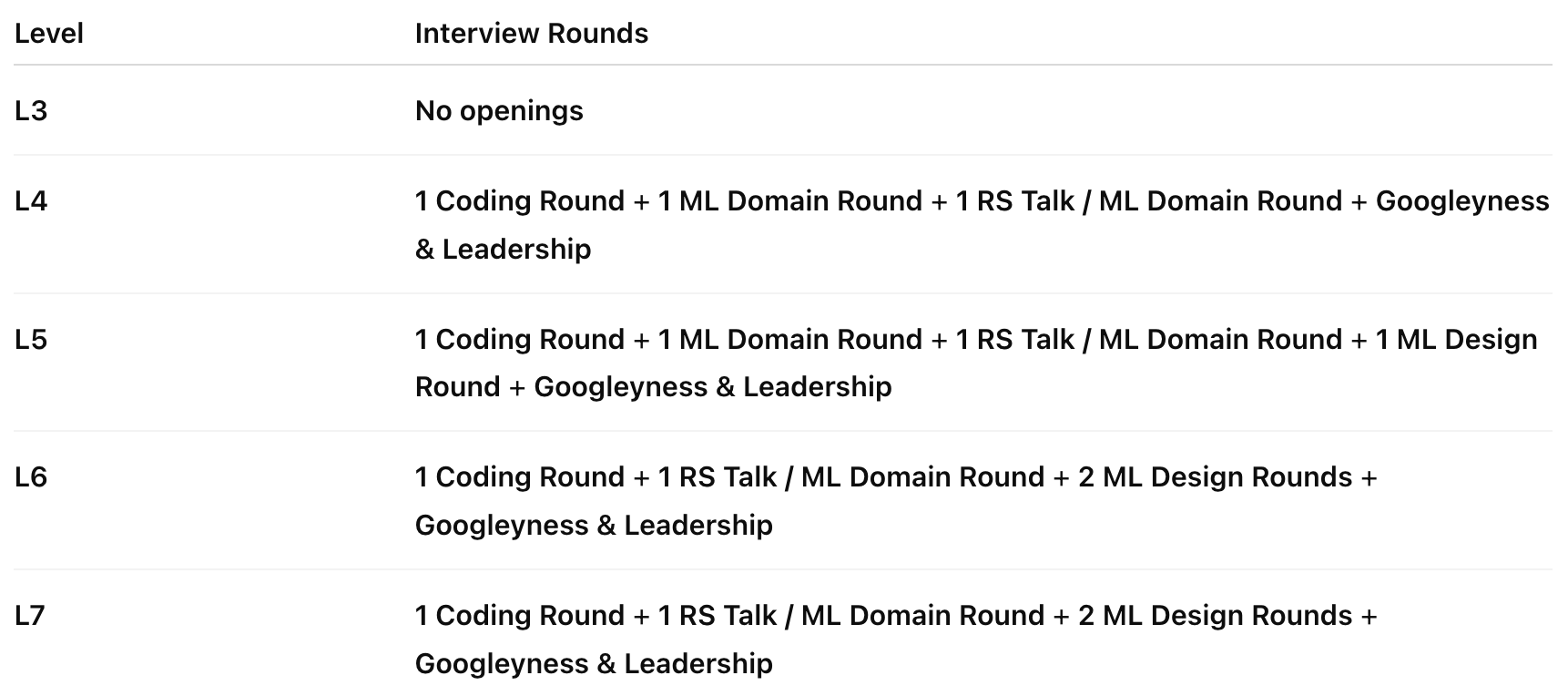
2. Machine Learning Engineer/ Machine Learning Software Engineer (𝑀𝐿 𝑆𝑊𝐸)
𝑇ℎ𝑖𝑠 𝑟𝑜𝑙𝑒 𝑖𝑠 𝑐𝑒𝑛𝑡𝑒𝑟𝑒𝑑 𝑜𝑛 𝑎𝑝𝑝𝑙𝑦𝑖𝑛𝑔 𝑚𝑎𝑐ℎ𝑖𝑛𝑒 𝑙𝑒𝑎𝑟𝑛𝑖𝑛𝑔 𝑡𝑒𝑐ℎ𝑛𝑖𝑞𝑢𝑒𝑠 𝑎𝑡 𝑠𝑐𝑎𝑙𝑒 𝑡𝑜 𝑠𝑜𝑙𝑣𝑒 𝑝𝑟𝑎𝑐𝑡𝑖𝑐𝑎𝑙 𝑝𝑟𝑜𝑑𝑢𝑐𝑡 𝑎𝑛𝑑 𝑖𝑛𝑓𝑟𝑎𝑠𝑡𝑟𝑢𝑐𝑡𝑢𝑟𝑒 𝑝𝑟𝑜𝑏𝑙𝑒𝑚𝑠.
A PhD or MTech/MS is preferred(not required), though strong industry experience can compensate.
𝐸𝑥𝑝𝑒𝑐𝑡𝑒𝑑 𝑡𝑜 𝑓𝑖𝑛𝑒-𝑡𝑢𝑛𝑒 𝑜𝑟 𝑎𝑑𝑎𝑝𝑡 𝑓𝑜𝑢𝑛𝑑𝑎𝑡𝑖𝑜𝑛𝑎𝑙 𝑚𝑜𝑑𝑒𝑙𝑠 𝑓𝑜𝑟 𝑑𝑖𝑓𝑓𝑒𝑟𝑒𝑛𝑡 𝑢𝑠𝑒 𝑐𝑎𝑠𝑒𝑠.
Makes informed decisions on feature selection, model architectures, and performance trade-offs.
𝑂𝑤𝑛𝑠 𝑡ℎ𝑒 𝑓𝑢𝑙𝑙 𝑚𝑎𝑐ℎ𝑖𝑛𝑒 𝑙𝑒𝑎𝑟𝑛𝑖𝑛𝑔 𝑙𝑖𝑓𝑒𝑐𝑦𝑐𝑙𝑒, 𝑖𝑛𝑐𝑙𝑢𝑑𝑖𝑛𝑔 𝑑𝑎𝑡𝑎 𝑝𝑟𝑒𝑝𝑎𝑟𝑎𝑡𝑖𝑜𝑛, 𝑡𝑟𝑎𝑖𝑛𝑖𝑛𝑔, 𝑒𝑣𝑎𝑙𝑢𝑎𝑡𝑖𝑜𝑛, 𝑑𝑒𝑝𝑙𝑜𝑦𝑚𝑒𝑛𝑡, 𝑚𝑜𝑛𝑖𝑡𝑜𝑟𝑖𝑛𝑔, 𝑎𝑛𝑑 𝑐𝑜𝑛𝑡𝑖𝑛𝑢𝑜𝑢𝑠 𝑖𝑚𝑝𝑟𝑜𝑣𝑒𝑚𝑒𝑛𝑡.
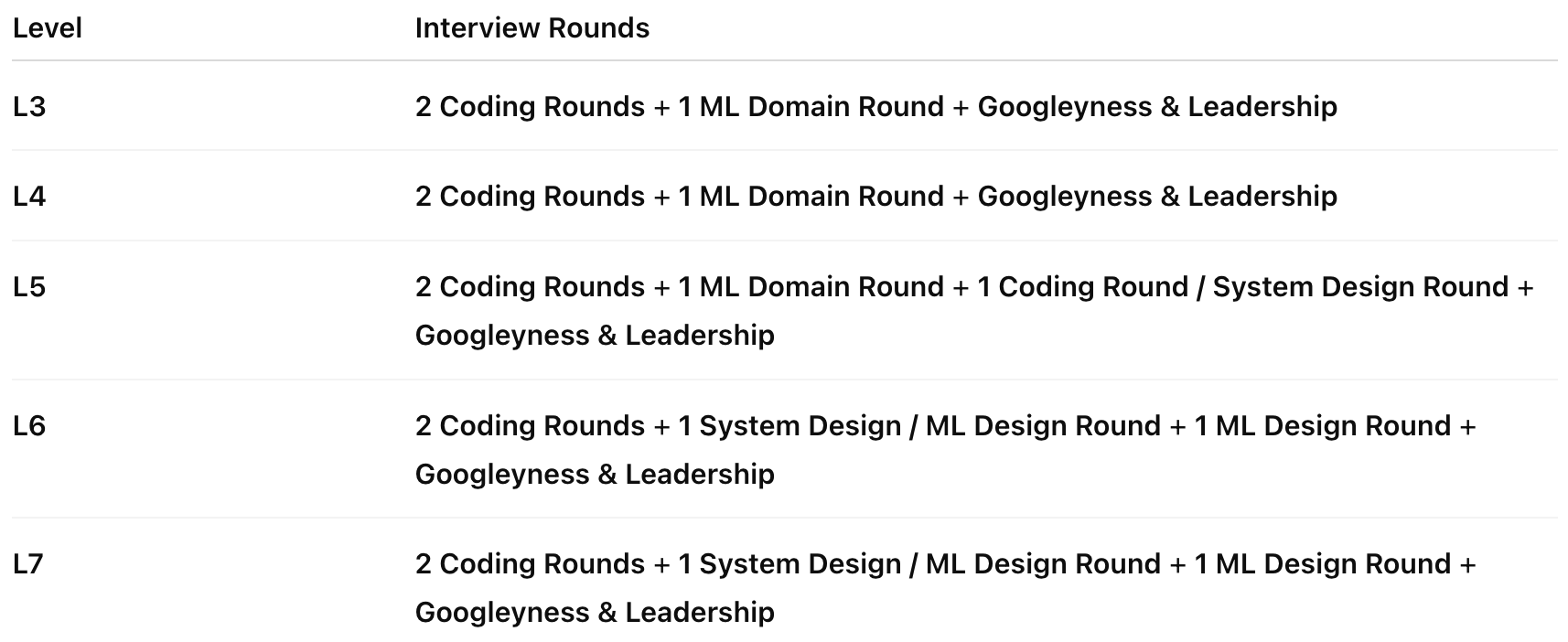
Requires strong software engineering and systems design skills to operate ML models reliably at scale.
Interview Process
The “Depth Gap” in ML Hiring
The primary challenge in ML hiring is that most candidates approach the process as they would a traditional Software Engineering (SWE) role. However, the key differentiator for AI & ML roles is the expected depth of research rigor combined with practical implementation.
In my experience interviewing candidates, I’ve observed two distinct patterns:
The Research-Heavy Candidate: These individuals are exceptional in “research talk” and can speak with great depth about their theoretical work. However, when it comes to the actual productionization of their research, they often lack technical depth.
The Systems-Heavy Candidate: These individuals are highly skilled in coding and distributed systems, yet they lack a fundamental understanding of the underlying research field.
The reality is that these roles require you to be: a researcher who understands the implications of their work at scale, and a coder who can bridge the gap between a paper and a production-ready system.
How Can We Prepare for a Machine Learning Interview?
Machine Learning interviews typically evaluate coding ability, ML fundamentals, system thinking, and depth in a focus area. Preparation should be structured around the different interview rounds.
1. Coding Round
What is evaluated
Problem-solving skills and algorithmic thinking
Data structures (arrays, strings, trees, graphs, heaps)
Code quality, edge cases, and time/space complexity
How to prepare
Practice DSA fundamentals (prefer LeetCode)
Be comfortable with arrays, hashing, recursion, BFS/DFS, DP
Write clean, readable code and explain your approach clearly
Always discuss time and space complexity
Practice implementing logic without heavy library usage
Tip: ML roles still expect strong SWE fundamentals—don’t underestimate this round.
2. Research Talk (for RSE / Research Scientist roles)
What is evaluated
Depth of understanding of your past work
Ability to explain research motivation, trade-offs, and impact
Clarity of thought and communication
How to prepare
Prepare 1–2 core projects/papers in depth
Be ready to explain:
Problem statement & why it matters
Existing approaches and limitations
Your contribution and key insights
Results, metrics, and failure cases
Expect follow-ups on assumptions, scalability, and future work
Tip: Interviewers care more about how you think than the number of papers.
3. ML Domain Round
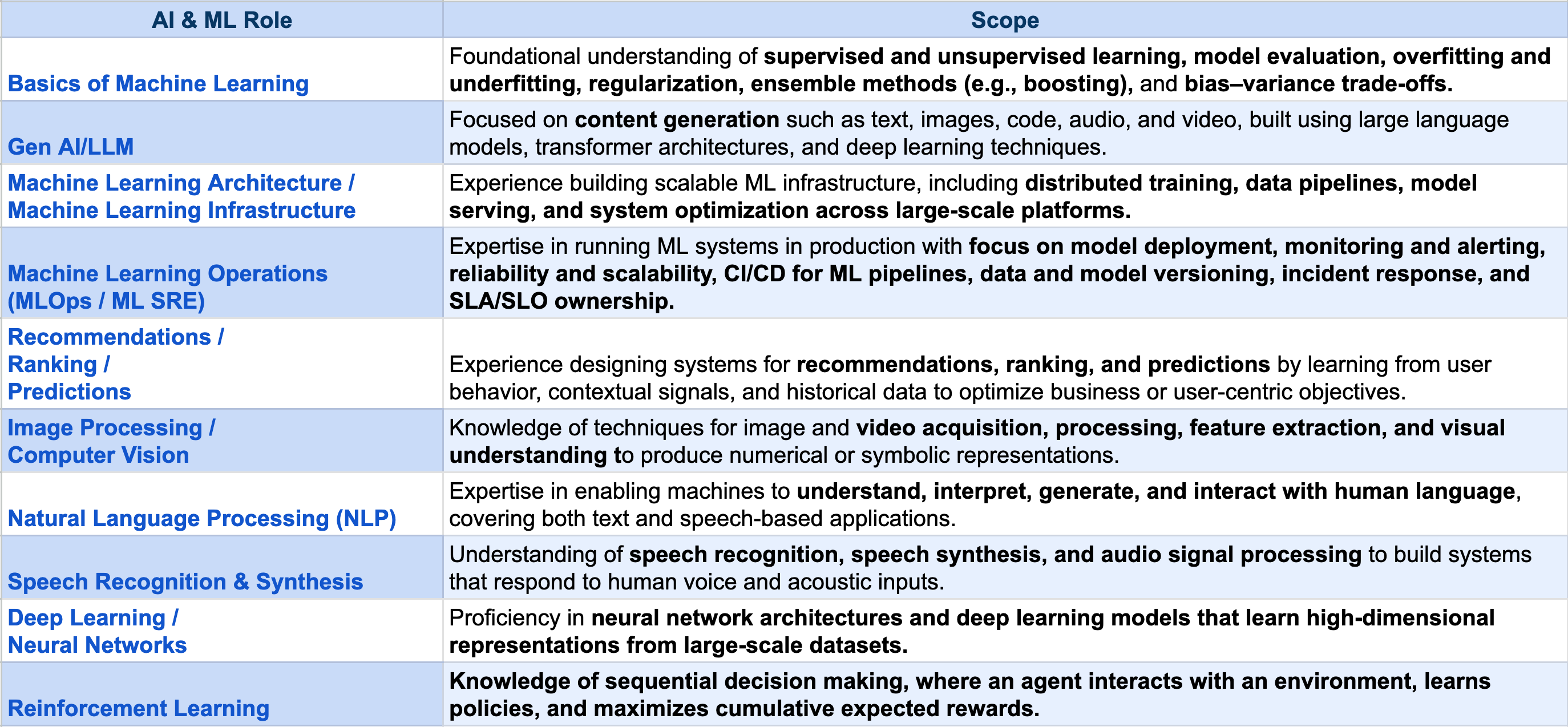
What is evaluated
Core ML knowledge and intuition
Ability to choose the right model for the problem
Key topics
Supervised vs unsupervised learning
Bias–variance trade-off
Overfitting, regularization, feature engineering
Evaluation metrics (AUC, precision/recall, RMSE, etc.)
Classical models: Linear/Logistic Regression, Trees, SVM, KNN
Basics of deep learning (CNNs, RNNs, Transformers – depending on role)
How to prepare
Understand why an algorithm works, not just how
Be able to compare models and justify choices
Practice explaining concepts in simple terms
4. System Design
What is evaluated
High-level system thinking
Scalability, reliability, and trade-offs
How to prepare
Learn basics of distributed systems
Practice designing systems like:
Recommendation engine
Search system
Real-time analytics pipeline
Cover:
APIs & data flow
Storage choices
Scaling & latency considerations
Monitoring & failure handling
Tip: This round is about engineering judgment, not ML depth.
5. ML System Design
What is evaluated
End-to-end ML lifecycle thinking
Ability to deploy, scale, and maintain ML models in production
Key areas
Data collection & labeling
Feature pipelines (offline vs online)
Model training & validation
Model serving & inference
Monitoring (data drift, model decay)
Retraining & rollback strategies
How to prepare
Practice designing ML systems like:
Fraud detection
Recommendation system
Ranking or prediction service
Discuss trade-offs: accuracy vs latency, batch vs real-time
Show awareness of production challenges
Tip: Senior levels expect clarity on ML + systems, not just models.
Resources
Conclusion
Hiring for AI and Machine Learning engineers is increasing rapidly as the field continues to grow, offering a promising future and competitive compensation. However, a key challenge remains: many candidates either lack depth in machine learning fundamentals or the discipline required to prepare effectively for interviews. I hope the suggestions shared here help you build stronger foundations, approach preparation more systematically, and improve your chances of succeeding in ML interviews.
Thanks keep it up very useful, also preferable to have a similar article on startups (those who pay well)
Awesome! Useful summary!
When preparing for an interview, especially the mentioned ML Domain round, do you typically only need to prepare for one of the domains (related to role) or are the interviews more wide breadth. For example could the interviewer could ask questions across the listed topics you listed(eg: ranking/recommendations, computer vision) or will they dive deep and really test knowledge on one? I’ve seen google MLE listings that seem both general and team specific.