
Google Hiring Process for Software Engineer

Introduction
Google is a dream company for many software engineers. At the same time, its hiring process is known to be exceptionally challenging; after all, Google aims to hire some of the sharpest minds in the world. To put the difficulty into perspective, the interview success rate is estimated to be around 0.2–1%. This statistic alone highlights how rigorous the process truly is.

To prepare effectively for Google interviews, it’s important to understand how the hiring process works end to end. In this blog, we’ll break down Google’s hiring process, explain what interviewers look for, and share insights that can help you prepare strategically.
Google Hiring Process
The hiring process starts when you apply for a role and can take anywhere from three months to over a year. While the process may feel slow at times, having patience and staying prepared throughout can make a significant difference.
Step 1: Application & Initial Review
Job Portal Application: The journey begins when you apply for a position through Google’s job portal.
Resume Screening: Your resume is reviewed by both an automated system and a recruiter to determine if you are a strong candidate. A referral primarily helps your profile pass through the automated screening stage.
Step 2: Initial Screening
Recruiter Outreach: If you pass the initial review, a recruiter will reach out to discuss the opportunity. During this conversation, they try to understand your background, help match you with the right role, and explain the interview process in detail. They also share relevant resources to help you prepare. Typically, you’ll receive a couple of follow-up emails that include interview preparation materials and a request to schedule the phone screening round.
Step 3: Phone Screening
Phone Screening: This is typically a 60-minute elimination round focused on data structures, algorithms, and problem-solving. You can expect medium-level LeetCode–style questions. The goal of this round is to assess whether you’re ready to move forward in the full interview process.
Step 4: The Interview Loop
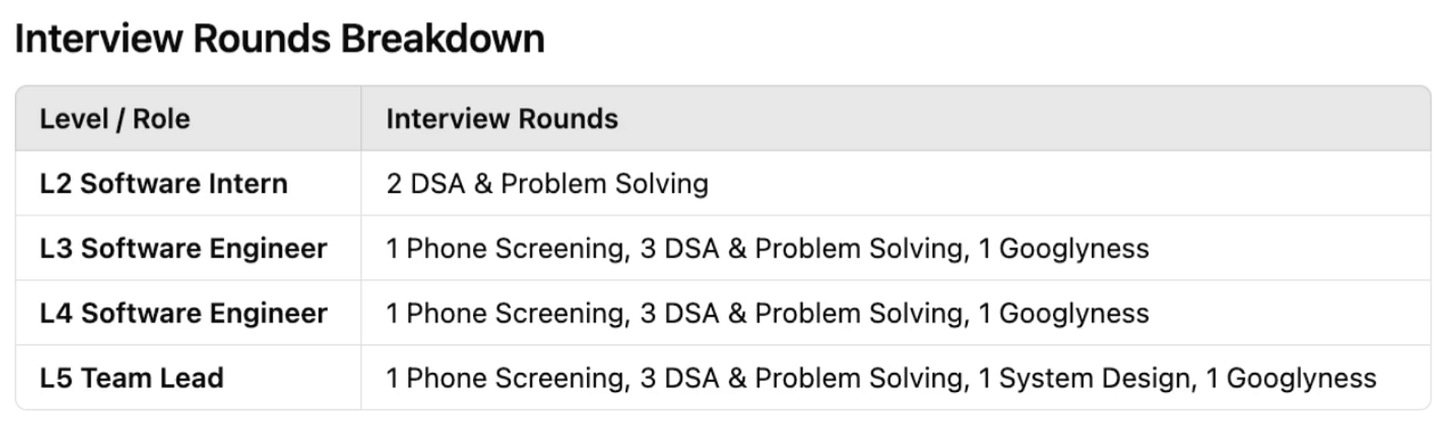
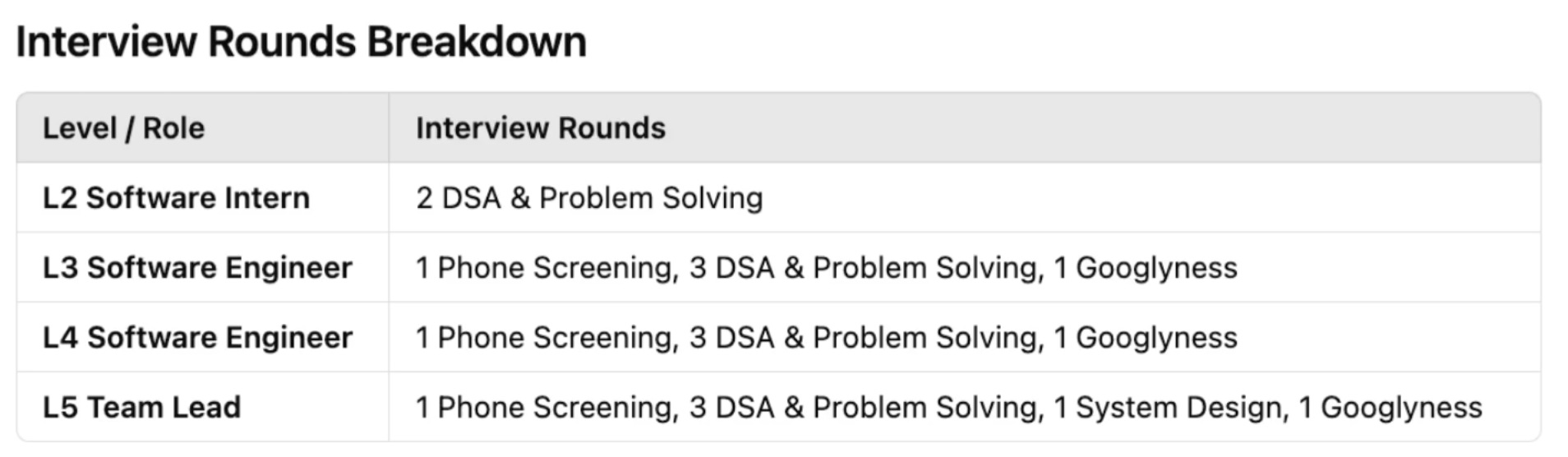
Onsite Interviews: If you clear the phone screen, you move to the onsite rounds. The number of interviews and the specific topics covered depend on the role and your level.
Step 5: Independent Evaluation
Feedback Documentation: After each interview, interviewers document their feedback and provide a recommendation: No Hire, Lean Hire, Hire, or Strong Hire. These evaluations help the recruiter decide whether to reject the candidate or move the profile forward to the Hiring Committee review.
Based on this feedback, the recruiter compiles a candidate packet that includes your resume, background information, and detailed interview performance. This packet is then submitted to the Hiring Committee for further evaluation.
Step 6: Hiring Committee Review
Hiring Committee Review: In this stage, the Hiring Committee reviews all interview feedback and supporting documentation to decide whether the candidate meets Google’s hiring standards for the role.
Depending on the feedback, the committee may decide to offer you a lower level or request an additional interview round.
Step 7: Team Matching
Finding the Right Team: Once the hiring committee approves, you move to team matching. This stage is about finding the right project rather than evaluating your skills.
Hiring Manager Discussions: Your recruiter shares your profile with hiring managers. If a manager is interested, a 1:1 discussion is scheduled to talk about your background and their expectations .
Step 8: The Final Offer
Offer Rollout: Once a match is confirmed between you and a hiring manager, the recruiter works on finalising and rolling out your official offer.
Final Thought
Google’s hiring process can feel intimidating, but understanding how it works removes a lot of the uncertainty. Each stage, from resume screening to phone interviews, onsite rounds, and hiring committee review; is designed to be structured, data-driven, and as fair as possible. A rejection at any point does not define your ability as an engineer; it simply means the bar was not met for that role, at that time.
The key to succeeding in such interviews is consistent preparation, strong fundamentals, and clarity of thought, not shortcuts or referrals alone. Focus on building problem-solving skills, writing clean and scalable code, and communicating your approach effectively. With the right preparation and mindset, the process becomes less about luck and more about readiness.